Draft. This case study does not appear on the home page or in the sitemap yet and uses noindex. This URL is for review before publication.
Website · Travel platform
Identity, catalog and a foundation ready to grow
For KOOP Viajes
01 · Project
A travel agency starting with a clear foundation
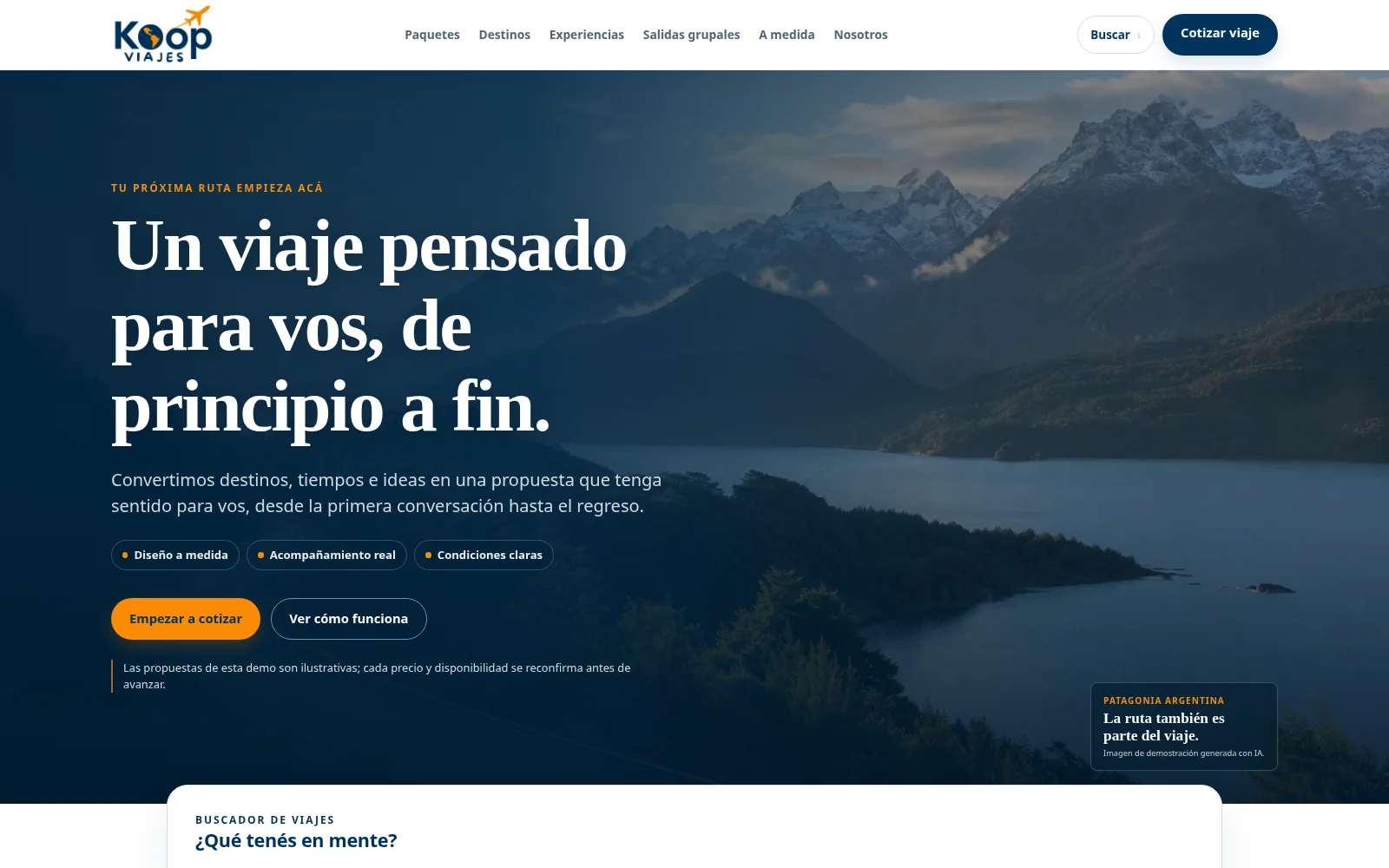
KOOP Viajes is an Argentine travel agency building its digital platform in stages. SEBA.ar designed and developed the public and technical foundation of the product: a new visual experience, an institutional website, a demo catalog and the first journeys for exploring, comparing and enquiring. The project also establishes the data, access and provider architecture on which the real catalog and commercial operations can be added. This stage makes its boundaries visible: the catalog’s proposals, images, dates and prices are illustrative, and the platform is not yet presented as an operational sales or booking system.
02 · Challenge
Inspire without promising data that does not exist yet
The challenge was to create a useful experience without confusing a demonstration with real inventory. In travel, prices, validity, services and availability need to preserve their source and verification date; the product also should not depend on an external provider that has not been confirmed. The foundation had to support manual entry first, distinguish implemented work from future stages and prepare permissions, auditing and data protection before collecting real information. At the same time, the brand needed a clear, responsive presence able to present destinations and proposals in its own voice.
03 · Solution
Website, demo catalog and architecture connected
SEBA.ar built an SSR website with an editorial homepage, destinations, experiences, group departures, custom travel, institutional information and frequently asked questions. A demo catalog holds 24 proposals in Supabase and supports filtering by destination, experience, month, duration and currency, plus configurable sorting. Each page presents an itinerary, included and excluded services, conditions and related proposals; a comparison tool places up to three options side by side. All illustrative commercial content carries a permanent disclosure and remains out of search engines. The enquiry flow preserves the selected trip’s context, and lead capture is implemented with validation, idempotency and abuse controls but remains closed until its legal and operational dependencies are complete. The admin foundation includes SSR authentication, invitations, recovery, MFA, role-based permissions, an enquiry inbox and a business-profile editor, while sales, booking and payment modules are explicitly reserved for later stages.
04 · Key features
A first complete, verifiable experience
Editorial public website
Homepage, destinations, experiences, group departures, custom travel, institutional information and FAQs in responsive navigation.
Demo catalog
Twenty-four illustrative proposals stored in Supabase, with permanent disclosure and no claim of confirmed prices or availability.
Search and filters
Destination, experience, month, duration, currency and configurable sorting for exploring the catalog from different starting points.
Travel pages
Day-by-day itineraries, included and excluded services, conditions, information provenance and related proposals.
Proposal comparison
Up to three trips side by side, with duration, departure, origin, currency, inclusions and exclusions in a shareable table.
Travel enquiry
A form prepared with trip context, validation, consent, idempotency, a honeypot, rate limits and Turnstile before capture is enabled.
Access and administration
SSR sessions, invitations, recovery, MFA, role-based permissions, an enquiry inbox and protected business-profile editing.
Secure data foundation
RLS, Storage, auditing, money in minor units and provider-independent contracts supporting future stages.
05 · Design and experience
Trust, warmth and room to imagine
The interface preserves the supplied logo and extends its blue and orange into a high-contrast visual system. Serif headings bring an editorial tone, while interface type keeps filters, forms and comparable data clear. Wide photography, route-inspired lines and generous white space support exploration without hiding demo disclosures. The composition adapts to phones and desktop screens, with visible focus, keyboard navigation and decisions that never depend on color alone.
06 · Development and technology
Ready to add operations in stages
Qwik 2, Qwik Router, TypeScript and Tailwind build the SSR experience, prepared for Vercel Edge. Supabase provides Postgres, Auth, Storage and RLS; Formisch and Valibot support the forms. The domain keeps monetary values in minor units, provider-independent contracts and a manual path as a primary capability. Security headers, auditing, origin controls and automated tests are part of the foundation before real operations are enabled.
07 · Result
A visible foundation with visible boundaries
The result of this stage is a digital identity and product foundation that can already be reviewed on the public homepage, together with complete catalog, comparison, enquiry and administration journeys in the code. The implementation identifies every illustrative data point and keeps features closed when their release conditions are incomplete. The public catalog, lead capture, first real login and commercial operations remain under validation, so the project is presented as a platform in development rather than an active sales or booking system.
The result above describes the documented technical scope. No commercial metrics are published because none are recorded as confirmed.
- Qwik
- Supabase
- Vercel
- Travel catalog
- Comparison tool
- Lead capture
- Responsive design
- Role-based security
Other work
Keep exploring
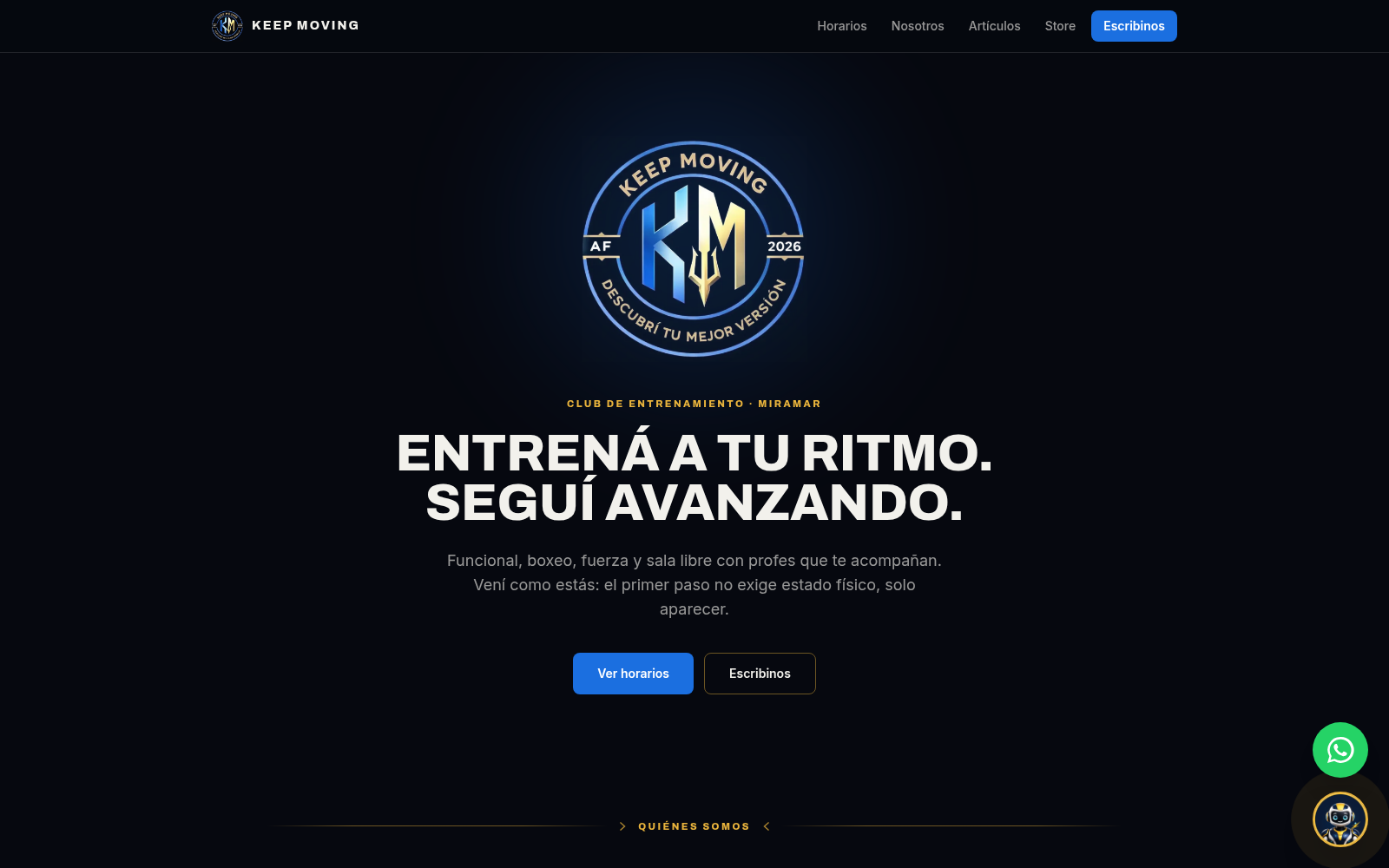
Website, operations and member access in one platform
View case studyBeforeDigital presence and daily operations split across chats, notes and spreadsheets.
SolutionA web platform with a public website, admin dashboard and private member portal.
TodayRegistrations, payments and attendance are centralized; members check their status without asking at reception.
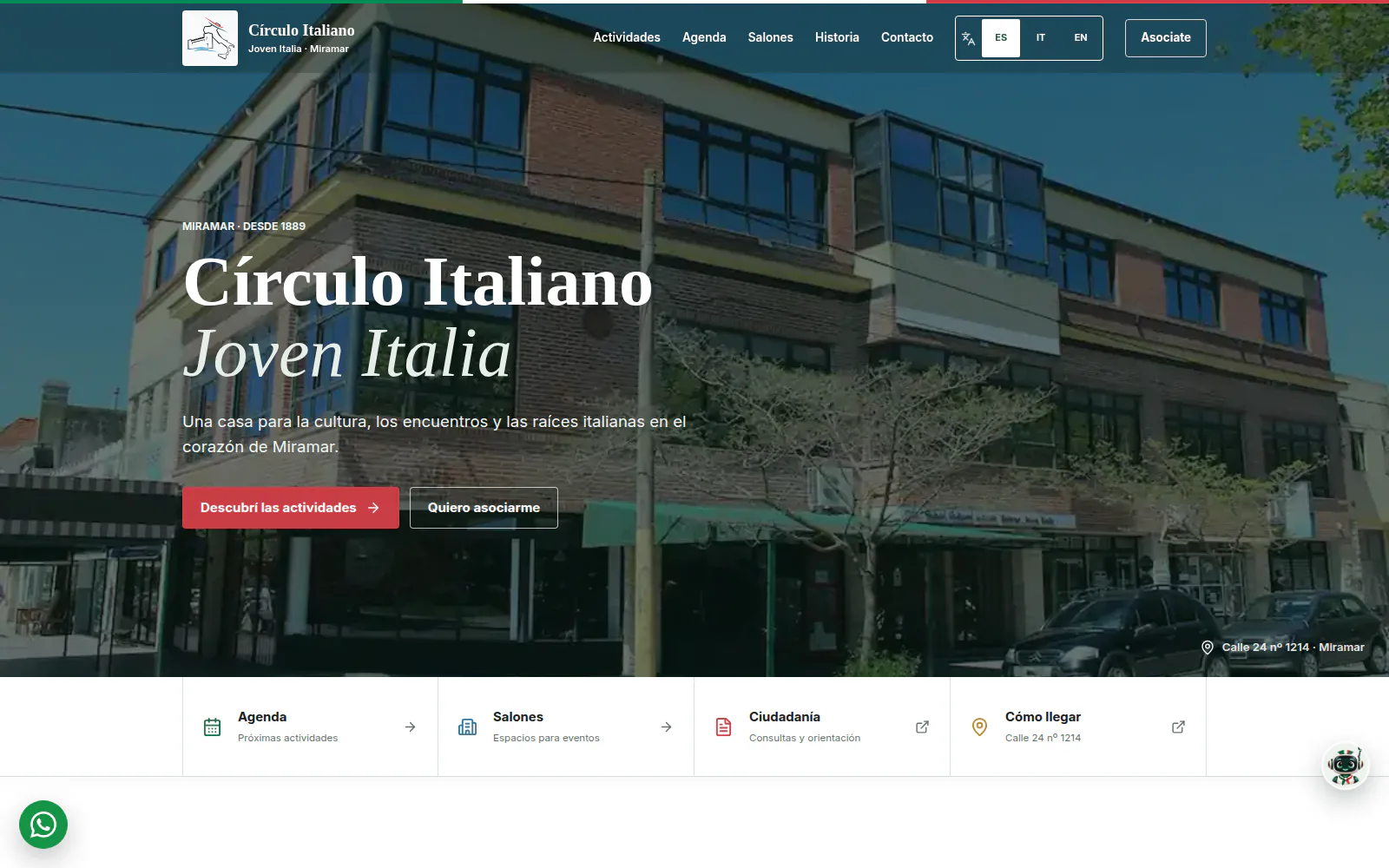
A trilingual platform for content and operations
View case studyBeforeInformation and archives were scattered; member and enquiry management was manual.
SolutionA trilingual platform with activities, archives, secure forms and a protected admin panel.
TodayThe community explores and signs up from their phones; the board publishes and manages members in one place.
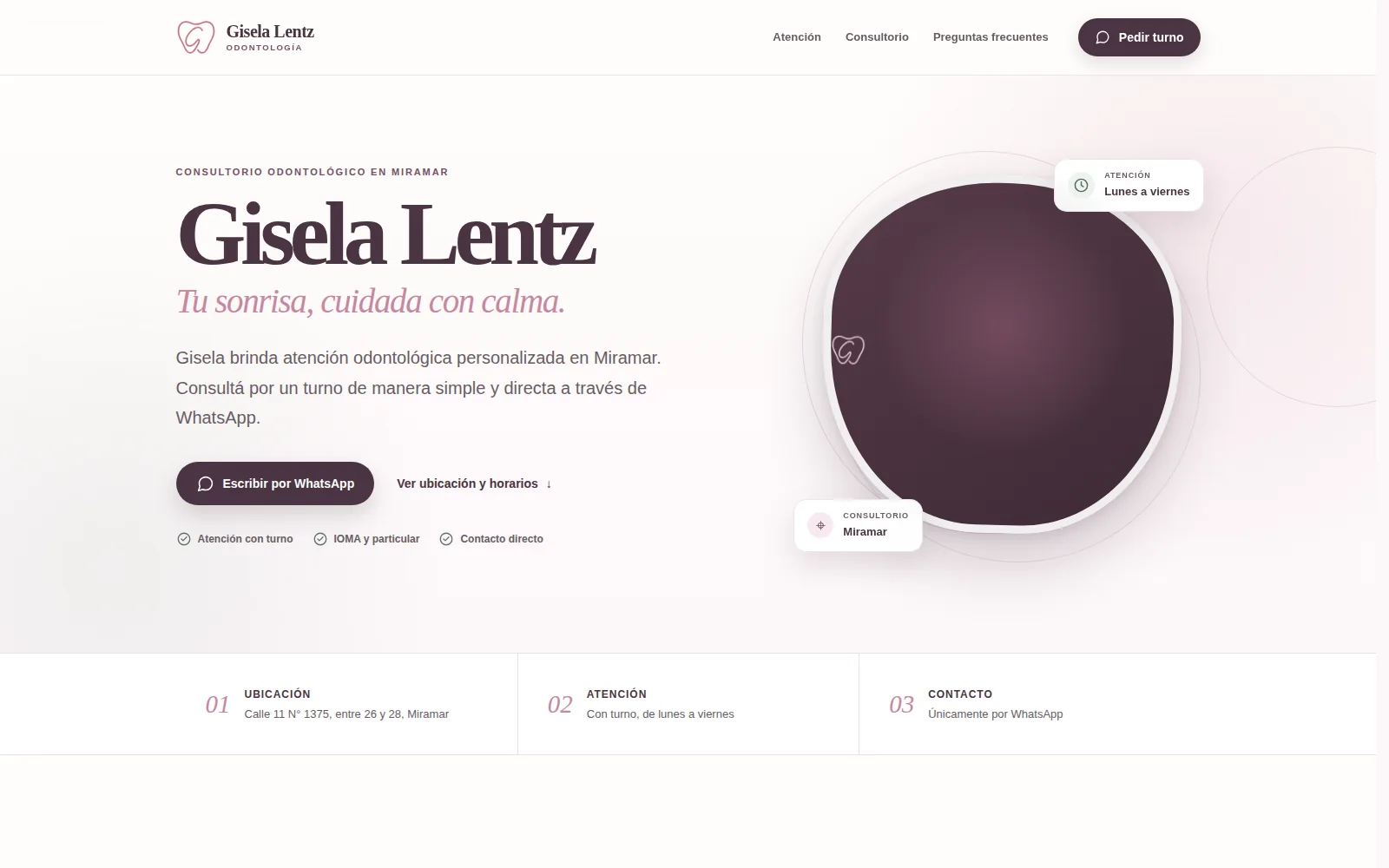
Appointments, deposits and WhatsApp, automated
View case studyBeforeAppointments and deposits coordinated by hand over WhatsApp, with a risk of double bookings.
SolutionAn application with a schedule, WhatsApp, deposit validation and Google Calendar.
TodayPatients check real availability and book; the daily schedule stays organized automatically.
What about yours?
A platform that can grow with your business
Does your business need to validate a foundation before adding operations? Tell me which stage matters now, and we can design a path that grows.